Green shoe option in IPO: impact on unlisted shareholders
· 3 min read · Written by the BuyUnlistedShares desk. Information only, not investment advice.
The greenshoe option allows underwriters to sell extra shares to stabilize the IPO price. This mechanism can affect unlisted shareholders by influencing post‑listing price and potential dilution.
The greenshoe option, also known as an over‑allotment option, lets underwriters sell extra shares—typically up to 15 % of the IPO size—to help steady the stock price after listing. This mechanism can influence the market value that unlisted shareholders see and may alter their ownership percentage if the option is exercised.
What is the greenshoe (over‑allotment) option in an IPO?
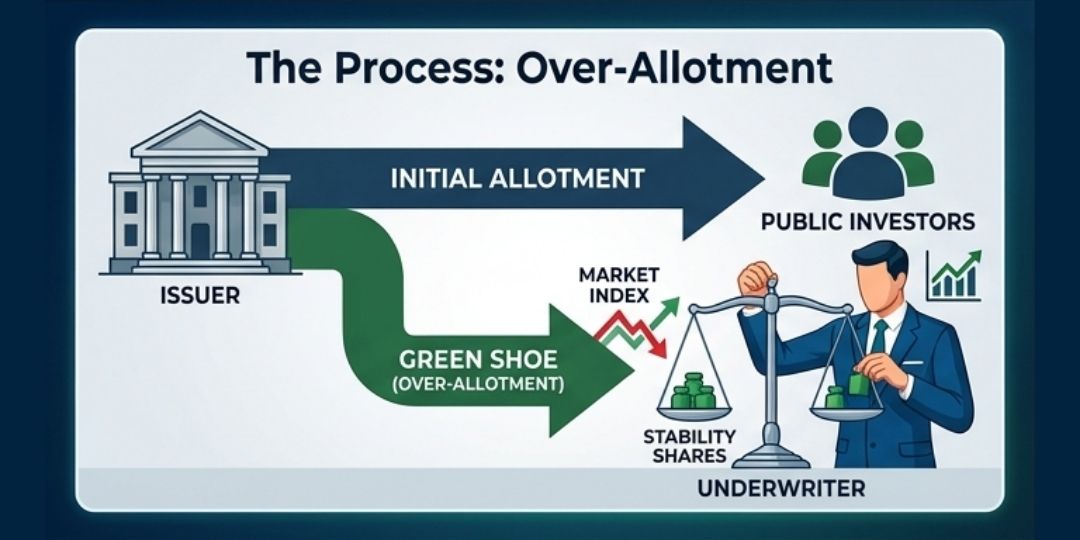
The greenshoe option, also known as an over‑allotment option, is a clause in the underwriting agreement that gives the underwriters the right to issue additional shares—typically up to 15 % of the original offering size—if demand is high. It is called a greenshoe because the first company to use it was Green Shoe Manufacturing. The option is exercised after the IPO pricing, allowing underwriters to buy extra shares from the company at the offer price and sell them to investors.
Why do companies and underwriters use the greenshoe option?
Companies use it to capture extra capital when investor enthusiasm exceeds expectations, while underwriters use it to support the stock price in the early trading days. By having the ability to sell more shares, underwriters can cover short positions created during the IPO process and reduce the risk of a price drop.
How does the greenshoe option help stabilize the IPO price?
If the share price falls below the offer price after listing, underwriters can buy back shares in the market and return them to the company, exercising the greenshoe in reverse. This buying activity provides support and helps prevent a sharp decline. Conversely, if demand is high and the price rises, underwriters may sell the extra shares, increasing supply and tempering excessive gains.
What impact does the greenshoe option have on unlisted shareholders?
Unlisted shareholders—such as founders, employees with ESOP holdings, or early investors—do not directly receive the extra shares created by the greenshoe; those shares come from the company’s authorized capital. However, the mechanism can affect them in two ways: price stabilization may reduce volatility, making it easier to sell holdings at a fair value; and if the greenshoe is exercised, the company’s total share capital increases, which dilutes the percentage ownership of existing shareholders. The dilution is proportional to the size of the over‑allotment relative to the pre‑IPO capital.
Are there any risks or downsides for unlisted investors related to the greenshoe?
While the greenshoe can aid price stability, it does not guarantee a positive outcome. If the price falls sharply after listing, the stabilizing effect may be limited, and unlisted shareholders could still face a lower market value. Additionally, the potential dilution means that any future earnings per share are spread over a larger base, which could affect the perceived value of their holdings.
Frequently Asked Questions
Question : What is the typical size of the greenshoe option?
Answer : Usually up to 15 % of the original offer size, though the exact percentage is set in the underwriting agreement.
Question : Who decides whether to exercise the greenshoe option?
The lead underwriter makes the decision based on post‑listing price movements and demand, in consultation with the issuing company.
Question : Does the greenshoe option create new shares for the company?
Answer : Yes, when exercised, the company issues additional shares from its authorized capital, increasing the total share count.
Qustion : Can unlisted shareholders sell their shares during the greenshoe stabilization period?
Answer : They can sell whenever the shares are listed and tradable, but lock‑in agreements or company policies may restrict early sales for certain holders.
Question : Is the greenshoe option used in every IPO?
Answer : No, its inclusion depends on the company’s preference and market conditions; some IPOs omit it entirely.
Question : How does the greenshoe differ from a regular secondary offering?
Answer : The greenshoe is tied to the IPO process and allows the underwriter to stabilize price immediately after listing; a secondary offering occurs later and is not linked to price‑support mechanisms.
Information only, not investment advice. Unlisted and pre-IPO securities carry liquidity, valuation and listing-timing risk; read the offer document and consult a SEBI-registered investment adviser for advice specific to your situation.